South Korea’s Lee Sees 2026 Growth as High as 3.6%, Says Stock Market Fundamentals Are Solid
Summary
- Vice Premier Lee Hyoung-il said South Korea’s economy could grow as much as 3.6% this year, with growth in the mid-3% range within reach.
- He said South Korea’s economy and stock market remain fundamentally strong, backed by a large current-account surplus, a semiconductor boom and solid stock-market fundamentals.
- The government said it views a South Korea-US currency swap as a sturdy line of defense for stabilizing the foreign-exchange market and is preparing market-stabilization measures if needed.
Forecast Trend Report by Period


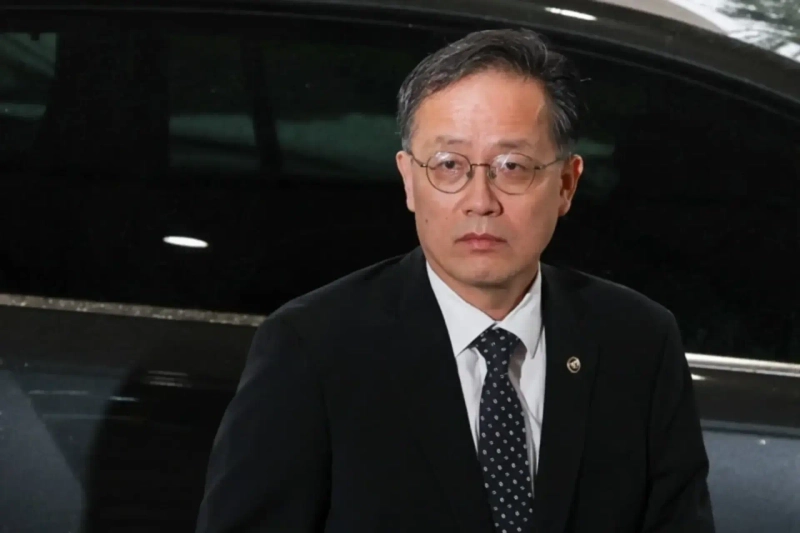
South Korea’s Vice Premier and Finance Minister Lee Hyoung-il said the economy could grow as much as 3.6% this year, and stressed that the country’s economic and stock-market fundamentals remain solid despite recent volatility in local equities.
At a meeting with reporters in Bangkok on October 16, Lee said growth in the mid-3% range, or 3.4% to 3.6%, is possible this year. That would be up to 0.6 percentage point higher than the government’s 3.0% forecast announced in July.
He said South Korea’s economy and stock market still rest on strong fundamentals. Growth is now being led by investment, and over time that momentum is expected to spread to consumption. A large current-account surplus also supports the view that the economy and equity market remain on a firm footing.
Lee also said the semiconductor boom has a high chance of continuing next year. Facility investment is currently very strong and could carry into next year. Demand for semiconductors still outstrips supply, he added.
On potential growth, Lee said the economy could move out of its prolonged downtrend and turn upward again. That moment is approaching and may be close at hand.
Addressing recent volatility in the domestic stock market, Lee said it was more likely a temporary correction. He pointed to concerns that global interest rates could rise more than expected, doubts over whether returns on artificial intelligence and semiconductor investment will be sustained, and geopolitical risks including tensions in the Middle East.
The government is closely monitoring market conditions and stands ready to take market-stabilization measures if needed, he said. Which steps are taken will depend on the situation.
On the drop in the won-dollar exchange rate, Lee said the move into the 1,550 won range in July had strayed from South Korea’s economic fundamentals. The currency is now returning to levels in line with those fundamentals. The won weakened to 1,559.2 per dollar in early July before strengthening to 1,328.9 on October 16.
Lee also commented on a possible South Korea-US currency swap, calling it meaningful and necessary as a strong safety net for the country’s foreign-exchange market. It is not a request born of an immediate shortage of foreign-currency liquidity, he said. As South Korea’s economy has grown, it needs a currency-swap arrangement on par with advanced economies, which would serve as a robust line of defense for the economy.
The government will increase the number of annual growth-forecast updates to three from two starting next year to better reflect rapidly changing economic conditions. It also plans to scrap its existing second-half economic growth strategy and instead announce additional policy measures whenever it revises its economic outlook.
Kim Ik-hwan, Hankyung reporter lovepen@hankyung.com

Korea Economic Daily
hankyung@bloomingbit.ioThe Korea Economic Daily Global is a digital media where latest news on Korean companies, industries, and financial markets.