PiCK
South Korea National Assembly Panel Reviews Petition to Scrap Crypto Tax, Warns Policy Reversal Could Hurt Credibility
Summary
- The National Assembly’s finance and economic planning committee said, as it reviewed a petition to scrap the virtual-asset tax due to take effect in January, that reversing the tax policy could damage the credibility of tax policy.
- The report said that while concerns over tax fairness, market contraction and wealth-building by younger people have some basis, further judgment is needed on whether they justify abolishing the virtual-asset tax itself.
- The government told parliament it can proceed with taxation of domestic and overseas virtual-asset transactions as scheduled by building an integrated analysis system for virtual-asset transaction data and CARF.
Forecast Trend Report by Period


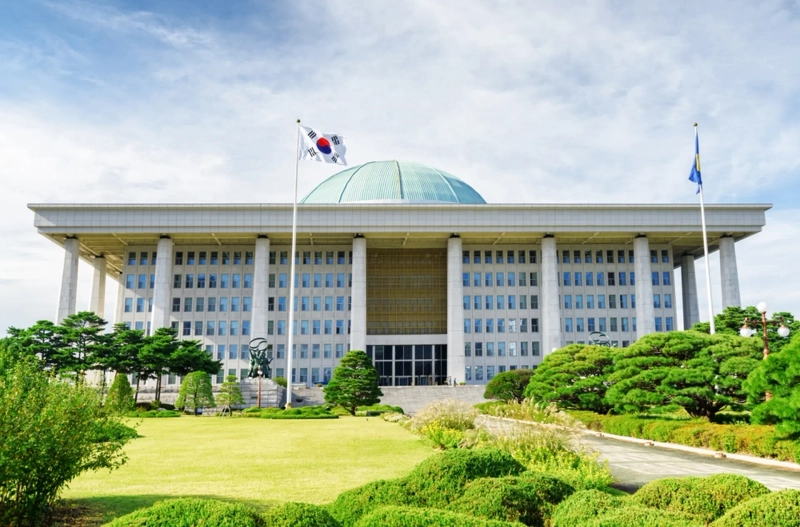
South Korea’s National Assembly finance committee, reviewing a public petition to abolish taxation on virtual assets scheduled to take effect in January, said another reversal could damage the credibility of tax policy.
According to the committee’s review report on the petition to abolish virtual-asset taxation, lawmakers examined tax fairness, investor protection and broader market effects. The petition was referred to parliament in May after receiving 50,910 signatures. Petitioners argued that taxing only virtual-asset income is unreasonable after the financial investment income tax was scrapped.
The report noted that the virtual-asset tax has already been delayed three times. Scrapping a system originally due to be introduced in 2022 would weaken the consistency of prior legislative decisions. Reversing a policy finalized through discussions including the tax subcommittee could also undermine confidence in policy and create instability in the virtual-asset market.
The committee said some investor complaints over tax fairness were valid. Ordinary capital gains on domestically listed stocks are generally tax-exempt, while virtual-asset income would be taxed after a basic annual deduction of 2.5 million won. Even so, the report said it may not be appropriate to directly link virtual-asset taxation to the now-abolished financial investment income tax. It added that whether the government should support the virtual-asset market in the same way it supports the stock market requires separate discussion.
The panel also reviewed the potential impact on market activity and on wealth-building by younger investors. According to the Financial Intelligence Unit, domestic virtual-asset market capitalization totaled 87.2 trillion won in the second half of last year, down 21.1% from a year earlier. The report acknowledged that implementing the tax could weigh on investor sentiment and burden younger investors trying to build assets. Still, it said additional judgment is needed on whether that warrants abolishing the tax itself.
On the issue of loss carryforwards, the report stressed that the purpose of the financial investment income tax differed from that of virtual-asset taxation. For virtual assets, only gains and losses generated within the same year can be netted out, meaning past losses cannot be deducted from profits in later years. The now-abolished financial investment income tax would have allowed carryforwards for up to five years to foster risk capital, while virtual assets were excluded because of concerns over encouraging speculative trading.
The government told parliament it is upgrading the information-collection systems needed for taxation. The Ministry of Economy and Finance plans to launch an integrated analysis system for virtual-asset transaction data by the end of this year and secure overseas trading data through the Crypto-Asset Reporting Framework, or CARF, starting in 2027. Based on that, the government said taxation of domestic and overseas virtual-asset transactions can proceed as scheduled.
Separately, bills are pending in the National Assembly, including one by lawmaker Song Eon-seog calling for abolition of the virtual-asset tax and others by lawmakers Jeong Seong-guk, Kim Sang-hoon and Park Min-kyu seeking to delay implementation. The committee is set to address issues related to virtual-asset taxation during a comprehensive parliamentary audit of the Ministry of Economy and Finance and the National Tax Service on October 22.
