Funding for AI Loans Starts to Dry Up: Pre-Market Must-Read by Park Shin-young
Summary
- The report said financing costs and credit risk are climbing sharply as investment in AI data centers accelerates, with AI-related debt, double-digit loan rates, and a shift toward corporate bonds and private credit markets all gaining traction.
- Moody's warned that AI private loans, PIK interest, and a wave of maturities from 2027 to 2029 could increase refinancing pressure and default risk.
- The report said Google's TPU sales expansion, Broadcom's $63 billion financing structure, and Ackman's preference for companies with long-term cash-generation power point to selective investment centered on AI infrastructure and high-quality growth stocks.
Forecast Trend Report by Period


1. Fed Seen Holding Rates Steady as Wall Street Splits on Strategy
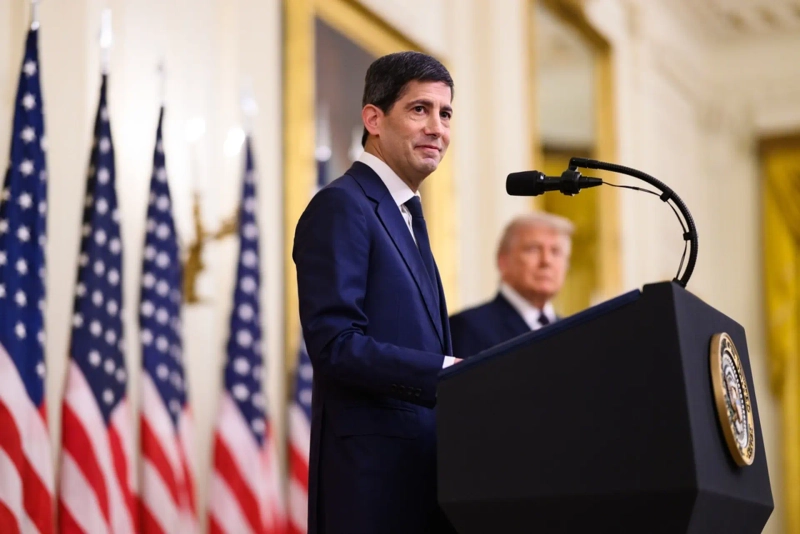
Wall Street is divided on how to position portfolios ahead of the Federal Reserve's October Federal Open Market Committee decision. Markets are pricing in about a 90% chance that the benchmark rate will be left unchanged. The key variable is what Fed Chair Kevin Warsh says at his press conference about the direction of monetary policy.
The Fed is due to announce its rate decision on Oct. 28. The target range currently stands at 3.75% to 4.00%. Gregory Daco, chief economist at EY-Parthenon, said Warsh needs to make a convincing case for holding rates steady even after September's increase and with inflation pressures still lingering. He also said the Fed must dispel any perception that monetary policy was influenced by politics ahead of the midterm elections. Without a sufficient explanation, bond selling could follow.
Liz Young Thomas, chief market strategist at SoFi, said investors should increase commodity exposure regardless of the Fed's future rate path. She cited the commodity ETF PDBC as an investment that can hedge against inflation and extreme weather. The fund is up 51% this year.
Phil Rosen, chief market strategist at Silvya, recommended the energy ETF XLE, citing rising power demand from the AI industry and a prolonged war involving Iran. The S&P 500 energy sector has climbed 55% this year, making it the best performer among the index's industry groups. Shares of Marathon Petroleum, Valero Energy, Phillips 66 and APA have more than doubled since the start of the year.
Some investors still favor defensive sectors. George Acheampong, founder of Capitalwize, said investors should focus on companies that can grow even without rate cuts. He recommended the consumer staples ETF XLP and the health-care ETF XLV, pointing to stable demand and cash flow. Rosen also named Eli Lilly as a preferred stock because of growth in the GLP-1 obesity-drug market and the company's ability to use AI.
Ultra-wealthy investors are concentrating on AI infrastructure. R360, a network for investors with net worth above $100 million, is investing in companies that supply power, capital and data centers rather than trying to predict the ultimate winner in AI. Its picks include power provider Constellation Energy, investment firm Blackstone and data-center operator Equinix.
The mood is more cautious at Long Angle, a network for investors with net worth between $5 million and $100 million. In a survey of about 200 members, 59% said AI-related stocks were overvalued. Another 52% said they were increasing allocations to safe-haven assets. The survey also showed growing caution toward sharply rising AI-related stocks including SanDisk and Oracle, along with weaker investment appetite for Tesla and SpaceX.
2. Anthropic Holds $131.7 Billion in Cash, Ranking Third Among U.S. Companies
AI company Anthropic has emerged as the third-largest holder of cash-like assets among U.S. corporations. Its future computing-related contractual obligations, however, far exceed that cash pile, raising the need for additional fundraising.
According to Anthropic's initial public offering filing with the U.S. Securities and Exchange Commission, the company had $112.4 billion in cash and cash equivalents and $19.3 billion in short-term investments as of the end of June. The total was $131.7 billion.
Only Berkshire Hathaway and Alphabet hold more cash-like assets among U.S. non-bank companies, according to CNBC and S&P Capital IQ. Anthropic's cash balance is larger than those of Amazon, Meta and Microsoft. It also exceeds the combined cash-like assets of Nvidia and Apple.
Anthropic is poised to raise another large sum through its IPO. The Wall Street Journal and other outlets have reported that proceeds could top $100 billion. If all of that were to flow to the company, its cash-like assets could exceed $230 billion. The size of any new share issuance and the portion to be sold by existing shareholders have not been finalized.
Anthropic has raised a total of $141 billion in private markets over roughly six years since its founding. That underscores how much money has been poured into AI model development and computing infrastructure.
The issue is how much the company still has to spend. As of the end of June, Anthropic had $321.4 billion in future lease-payment obligations and $265.6 billion in fixed or minimum-payment contractual obligations. The total came to $587 billion, about 4.5 times its cash-like assets at the same point.
Contracts signed or amended after the end of June created another $245 billion in payment obligations. A simple tally would bring the figure to $832 billion. The company has not disclosed a consolidated total under the latest terms, so that should not be treated as a final sum. These are contractual obligations paid over time, not debt that must be repaid immediately.
Anthropic's computing and infrastructure costs in the first half of this year were $8.95 billion. The company said it typically secures computing capacity 12 to 18 months before actual use and begins recognizing related costs when that capacity becomes available. That means actual expenses could rise sharply in the period ahead.
That helps explain why Anthropic is pursuing more funding despite its enormous cash reserves. If future AI-service revenue and cash flow fail to grow as projected, the company may need to keep raising outside capital to sustain investment.
3. AI Loans Surge, but Banks Stay Cautious
Corporate lending at U.S. banks is rising quickly as construction of AI data centers accelerates. Large lenders are tightening risk management, however, pushing companies to broaden funding sources through the corporate bond market.
Corporate loans at the 25 largest U.S. banks rose about 10% in the third quarter from a year earlier, the Wall Street Journal reported. Excluding the pandemic period, that was the fastest pace of growth in more than a decade. Borrowing tied to data-center spending by Microsoft and Meta, along with funding demand from related construction companies, drove the increase.
The lending boom gives banks a chance to expand interest income. Equity investors are taking a more measured view. The KBW Nasdaq Bank Index has gained about 5% this year, badly lagging the S&P 500's nearly 13% rise.
JPMorgan Chase said risk management matters because money is flowing into the AI industry through multiple channels. Large banks are wary of extending additional loans to companies that have already borrowed heavily, such as Oracle. Wells Fargo also said it is closely checking who the actual users of data centers are and who is responsible for repaying loans.
The AI investment boom is also affecting regional banks. When large lenders finance data-center developers directly, regional banks are providing capital to construction firms and equipment suppliers tied to those projects. Fifth Third Bancorp said it is lending to the companies doing the actual construction rather than to data-center developers themselves.
There is a risk if AI investment slows. Spending on equipment and hiring by construction firms could become a burden. PNC Financial acknowledged that a slowdown in AI investment could weaken overall loan growth across the banking industry.
A gap is also widening between AI-related investment and spending in other parts of the U.S. economy. Power-related construction spending in August rose about 9% from a year earlier, while residential construction spending fell about 5%. KeyCorp said years of underinvestment in U.S. power infrastructure mean grid expansion could continue even if AI investment cools.
As banks grow more cautious on AI-linked lending, companies are raising money directly through bond sales. That is shifting part of the credit risk once borne by banks to bond investors and other financial firms. It also helps explain why prices of AI-related corporate bonds have fallen recently and financing costs have risen.
4. AI Loan Rates Top 10%, Raising Alarm Over Funding Lines
The money needed for AI data-center investment is surging, but financial firms and investors face limits on how much they can provide. Global AI-related debt financing by companies hit a record $460 billion this year, Bloomberg reported.
AI-related companies will need trillions of dollars more in funding. Interviews Bloomberg conducted with more than 30 finance-industry participants showed the funding environment has become much tougher than it was just a few months ago.
At least 18 data-center financing deals in the junk-bond and leveraged-loan markets are carrying double-digit interest rates. JPMorgan and Goldman Sachs had to cut the price on a $5 billion loan for AI cloud company Volta Infrastructure and lift the yield to more than 11% to sell it to investors.
Yields on top-rated data-center asset-backed securities have also climbed, from below 5% earlier this year to around 7% recently. Morgan Stanley said financing multibillion-dollar data-center construction becomes much harder once rates approach 8%.
Citadel Securities warned that risk in the AI loan market could spread from small and midsize data-center companies to large technology firms. If a data-center company cannot repay its loans, pressure could also hit the big tech companies that backed the financing or signed long-term purchase agreements.
Tucker Roberts, an analyst at Citadel, said the key question is no longer the creditworthiness of large technology firms themselves. It is whether there are enough investors willing to absorb the huge amount of debt tied to those companies.
Credit risk among AI-related companies is also showing up in the credit-default swap market. Bloomberg reported that Oracle's CDS cost hit a record high last week. CDS costs for SpaceX, Nvidia and Meta also rose to elevated levels. Concerns are also mounting over the credit risk of major AI companies including Broadcom.
Average yields on investment-grade bonds issued by technology companies stand at about 6%, up 1.4 percentage points from a year ago. Even high-quality Big Tech borrowers are raising money at higher costs than before.
Another risk worrying investors is contract cancellations tied to delays in data-center construction. Some data-center contracts include clauses allowing customers to cancel if construction is delayed by three months or more, or by more than 180 days.
One hedge fund declined to invest after confirming a term allowing customers to walk away if a data-center project was delayed by more than three months. Oracle also notified counterparties in September that it could postpone payments under a force majeure clause if construction of a New Mexico data center is delayed.
Oaktree Capital Management, KKR and Carlyle Group are screening investments more strictly, taking into account technology shifts, construction delays, power shortages and permitting issues.
The Wall Street Journal said banks are now responding more cautiously than they did before the 2008 financial crisis by setting loan limits for specific companies and distributing riskier loans to other investors. The new concern is that risk leaving the banking system is being transferred to private credit and bond markets.
5. Moody's Warns on AI Private Loans
AI-related lending has become a key growth driver for private credit, but Moody's warned that credit risk could rise as a large wave of maturities comes due from 2027 through 2029.
Moody's said a substantial volume of loans, including AI-related borrowings, will mature in private credit markets between 2027 and 2029. If companies cannot repay existing debt and have to refinance, higher rates could leave them with a heavier interest burden.
One important issue is how interest is being paid. Of the 607 companies Moody's tracks, about 17% are paying part of their interest with additional debt rather than cash. That is known as payment-in-kind, or PIK, interest.
For example, if a company borrows about $7.2 million and owes about $720,000 in annual interest, it would normally pay that interest in cash. Under a PIK structure, however, the borrower can add the interest to principal instead of paying cash, increasing the debt to about $7.9 million. That reduces immediate cash outflows but raises the long-term debt burden.
Moody's identified 2028 as a particularly risky year. AI data-center projects often require huge upfront spending on construction and equipment, while revenue comes later. If data-center launches are delayed or customer demand falls short of expectations, companies may lack the cash needed to repay principal and interest.
The AI industry's circular financing structure is another risk. A semiconductor company may invest in a data-center operator, which then uses that money to buy semiconductors from the same company. Repeated transactions of that kind can lift both chipmaker revenue and data-center investment at the same time.
If the data-center operator runs into trouble, financial firms could face loan losses while the chipmaker could suffer both lower sales and investment losses. Weakness at one company could spread to others.
Valuation practices at private credit funds are also a concern. Because private credit does not trade daily in public markets, funds often use their own valuation models to estimate the value of loans.
If a borrower's repayment ability deteriorates but asset values are not adjusted immediately, investors may recognize the real loss risk only with a delay. In private credit funds with limited redemption rights, the gap between marked values and actual recoverable amounts may not become clear until assets are sold.
Moody's warning shows that the crucial question is not just how quickly AI investment is growing. It is how much cash companies are actually generating. If cash flow from data-center operations is insufficient to cover principal and interest, expansion could end up increasing debt burdens instead of creating value.
6. Google Expands TPU Sales, Taking Aim at Nvidia
Google is expanding sales of its in-house AI chips, known as TPUs, to outside cloud companies as it steps up its challenge to Nvidia. Some on Wall Street project TPU revenue could reach as much as $99 billion next year.
Google is working with Oracle to widen external supply of its TPU chips, CNBC reported. The company has been developing TPUs since 2013, but it only began full-scale sales to outside customers in the second quarter of this year.
Until now, Google had focused on bundling its chips, AI models and cloud services. It is now trying to expand the market by supplying TPUs even to companies that do not use Google Cloud.
The TPU push is tied to rapid growth in Google Cloud. Wall Street expects Google Cloud's third-quarter revenue to rise about 90% from a year earlier. That would exceed the 82% growth posted in the second quarter.
Google Cloud generated $25 billion in second-quarter revenue, less than Amazon Web Services at $42 billion and Microsoft Azure at $29 billion. Among the three, however, Google is growing the fastest.
Wall Street expects the TPU business to scale quickly. TD Cowen projects TPU revenue will rise from $9.4 billion in the second half of this year to $62.5 billion in 2027.
Wells Fargo estimates third-quarter TPU revenue at about $9 billion and next year's revenue at $99 billion. Forecasts vary widely by firm, and actual revenue will depend on the timing of supply-contract execution.
Google's TPU advantage lies in cost. Semiconductor research firm SemiAnalysis estimated that the total cost of ownership and operation for Google's latest Ironwood TPU server is about 44% lower than for Nvidia's GB200 server.
Google Cloud Chief Executive Officer Thomas Kurian said the payback period for the company's in-house AI servers is less than two years. For servers using its own chips, the payback period is about half that of conventional AI servers.
Expanding external TPU sales could weigh on profitability. TD Cowen estimates the TPU sales business has an operating margin of about 20%. That is below Google Cloud's overall operating margin of about 35%, meaning a larger TPU mix could drag down margins in the cloud division.
Google's TPU customers include companies that compete with it in the AI model market. Anthropic signed a contract worth tens of billions of dollars with Google last year and agreed to use as many as 1 million TPUs.
OpenAI is also seeking to buy Google TPUs. That leaves Google competing with Anthropic and OpenAI in AI models while supplying them in the semiconductor market.
The TPU expansion is also a major growth opportunity for Broadcom. Broadcom is a key partner in developing Google's TPUs.
Broadcom this week unveiled a $63 billion financing structure backed by Blackstone and three large banks. Under the arrangement, a financial vehicle buys TPUs and networking equipment from Broadcom and leases them to Anthropic for five years.
William Blair said the funding would cover about half of Anthropic's financing needs in 2027. Google's broader TPU push is now linking chipmakers and AI model developers with large-scale financing businesses as well.
7. Ackman Says Buy Companies You Would Hold for 20 Years
Billionaire hedge-fund investor Bill Ackman, chief executive officer of Pershing Square Capital Management, said investors should buy companies that can sustain their competitive edge and generate cash consistently over the long term.
In a podcast interview released on Oct. 28 with Nicolai Tangen, chief executive officer of Norges Bank Investment Management, Ackman said investors should buy businesses that would retain their value over the long run even if the stock market closed for 20 years.
He said he cares more about lasting competitiveness and cash-generation ability than short-term share gains. Ackman added that he prefers companies that can maintain high growth for a long period without needing to reinvest large amounts of the cash they generate back into the business.
He also said investors need to be able to forecast cash flow over the next 10 to 20 years with reasonable confidence in order to value a company. He tries to avoid businesses that are heavily dependent on external variables beyond their control, such as commodity prices, interest rates or regulatory changes.
Pershing Square is concentrated in a small group of companies including Amazon, Microsoft, Meta, Brookfield, Uber, Visa and Mastercard.
Ackman said there may be 200 to 300 great companies around the world, but chances to buy them at attractive prices are far rarer. Finding a good company matters, but so does buying it at the right price.
He also advised investors to test their views by closely examining the arguments of short sellers who are most critical of a company. If investors can rebut those opposing views logically, their conviction may strengthen. If the criticism holds up, they should revise their own judgment.
Ackman said AI is affecting every company and investors need to distinguish between those that will benefit and those whose existing businesses could be threatened.
He said he bought Amazon after President Donald Trump announced tariffs, and bought Meta and Microsoft when their shares fell on concerns over rising AI investment.
More recently, Pershing Square's returns have come under pressure as worries over AI capital spending have intensified. The U.S.-listed closed-end fund Pershing Square USA, or PSUS, has risen 42% over the past three months but fallen 16% in October. Meta's stock also dropped 14% in October on concern about AI investment burdens even after the company posted earnings that beat market expectations.
Ackman took about a $400 million loss on Netflix in 2022 and sold the stake. He disclosed in August this year that he had invested in Netflix again.
Park Shin-young, New York correspondent at Hankyung.com nyusos@hankyung.com

Korea Economic Daily
hankyung@bloomingbit.ioThe Korea Economic Daily Global is a digital media where latest news on Korean companies, industries, and financial markets.