An ordinary-long 17,500 characters - 260112 revision
Summary
- Layer3 said it has built sustainable user onboarding infrastructure by combining Web3 mass adoption, discovery and education, and on-chain identity (CUBE).
- Layer3 said it designed a value-capture flywheel that links platform growth with token value through the $L3 token, a buy-and-burn structure, and layered staking.
- Layer3 said it has proven product-market fit—through a $15 million Series A, $16.5 million in revenue, and the Robinhood–Arbitrum partnership—and is emerging as a core aggregator in Web3.
Forecast Trend Report by Period



1. Getting Lost in an оке of Information
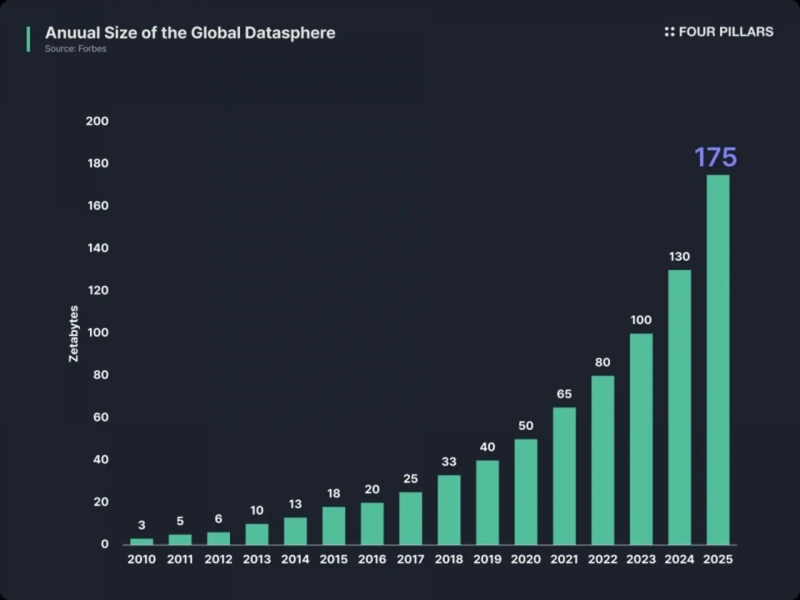
As the volume of information exceeded what people could realistically process, humanity faced two enormous challenges: a daunting “Chaos of Discovery,” where it’s unclear what to look at first, and a “Barrier to Learning,” where one must learn how to use what has been found.
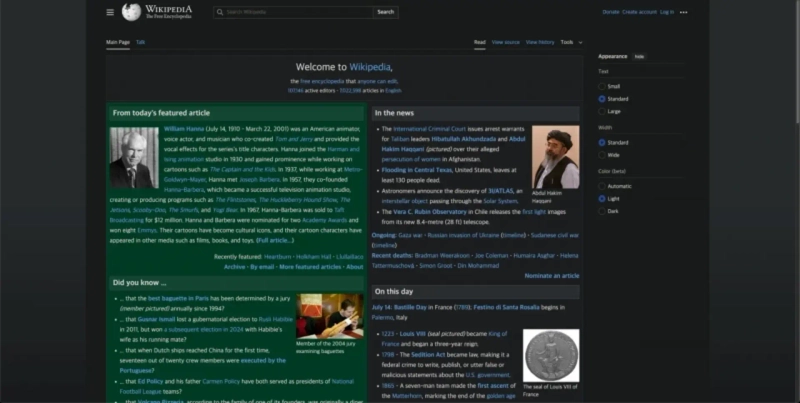
Web2 (Web2) has offered effective solutions to this problem. Powerful search engines such as Google and Naver imposed order on chaos, while platforms like YouTube and Wikipedia—where anyone can produce and consume knowledge—along with structured online courses significantly lowered the learning barriers for complex technologies and services. As a result, many technologies and services were able to expand into the mass market.
However, in the world of Web3 (Web3), which champions the new value of decentralization, we are confronting this old problem again. Web3 resembles the early internet before reliable guides or search engines existed—an untamed frontier filled with disorderly, fragmented information. If a user searches for Web3 information on X (formerly Twitter), where Web3 and crypto information spreads the fastest, what they encounter is fragmented content: dozens of influencers strongly recommending different projects. Because it is difficult to determine which sources are trustworthy, it is not easy to obtain high-quality information.
To make matters worse, the early Web3 ecosystem relied on reward models based on short-term gains—such as airdrops and liquidity mining—further exacerbating the problem. This competition for rewards turned into “Noise” that interfered with users’ efforts to find valuable “Signals.” As a result, users were swept up in speculative information rather than enjoying the true fun of discovery, and projects wasted resources attracting “airdrop hunters” chasing short-term profits rather than authentic community members.
Ultimately, for Web3 to move beyond a niche audience and reach mass adoption, it must provide users with new, trustworthy “guides” amid the flood of information—and, through them, restore the value of “discovery” and “learning.”
2. Two Keys to Web3 Mass Adoption: Discovery and Education
For these values to shine again, two solutions are needed. First is the problem of “trustworthy discovery” that helps users avoid getting lost in the vortex of countless projects. Second is the problem of “effective education” that helps users overcome the barriers of complex technology. Only by holding both keys can Web3 adoption expand from a small group of users to the broader public.
2.1 The First Key: Trustworthy Discovery
In today’s Web3 ecosystem, discovering new projects is inefficient and risky. Users often rely on fragmented recommendations from Twitter influencers, Telegram “alpha” groups of uncertain credibility, and airdrop campaigns aimed purely at short-term profits. These approaches tend to be driven more by transient hype than by a project’s intrinsic value, increasing exposure to rug pulls and indiscriminate shilling.
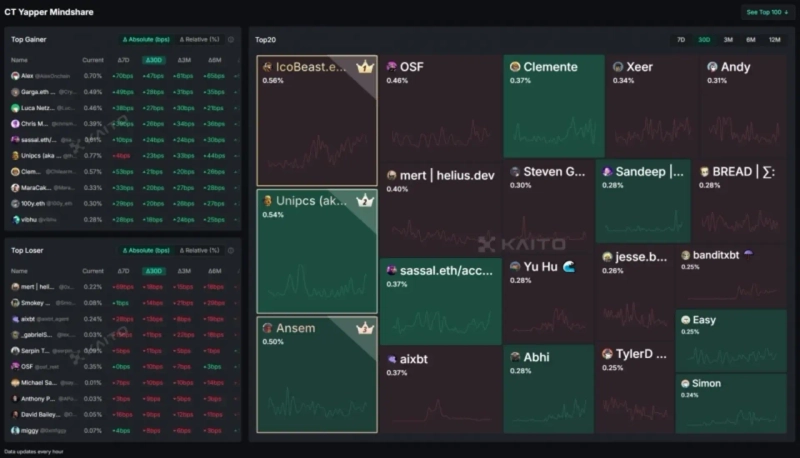
To address these difficulties in information discovery, platforms like Kaito—which uses AI to analyze and rank projects’ mindshare within the Crypto Twitter environment—drew attention. To encourage user participation, Kaito introduced a rewards system that grants points for activities such as creating or sharing content.
However, such reward models also produced unintended side effects. As competition to earn more points intensified, some users focused on simple sharing or repetitive posting rather than in-depth analysis of projects. As a result, voices began to emerge saying it had become even harder to filter high-quality information on X feeds, and this was cited as a limitation that diluted part of the platform’s original value proposition in information discovery.
In this way, reward models achieved some success in driving participation, but also created side effects such as degraded information quality and distorted user behavior. In particular, short-term incentive structures shifted attention away from the projects themselves and toward actions designed to maximize points.
This trend also burdens projects. Even if they develop innovative technology, without a massive marketing budget they can easily be forgotten by the market. They try to break through by minting tokens and distributing them for marketing—an unavoidable short-term reward tactic—but this leads to a vicious cycle of attracting only “airdrop hunters” and automated bots interested solely in rewards rather than the project’s vision.
To solve this “discovery problem,” the ecosystem needs something akin to a “Google of Web3.” A platform that plays this role should not merely list Web3 projects; it must be a trusted gateway that “discovers,” “curates,” and directly “connects” users to valuable projects. In the whirlwind of countless projects and information, it must serve as a “value search engine” users can trust to begin exploring.
2.2 The Second Key: Effective Education
While mindshare platforms like Kaito made project discovery easier, users’ actions often failed to remain on-chain. Writing posts and earning points was active, but the share of users who actually connected wallets, tried dApps, or otherwise interacted directly with projects was low. From the user’s standpoint, they discovered projects but did not proceed to participation.
To create real value for both users and projects, discovery must naturally flow into direct engagement. In other words, it needs to be “discovery-to-landing.” Users should not just take information and leave; they should proceed to the stage of touching the project’s smart contracts and experiencing the community ecosystem firsthand.
The problem is that many users perceive a high barrier to entry for on-chain activity. Wallet connections, gas fees, swaps, staking, bridges—the practical Web3 environment is excessively unfamiliar and complex for beginners. Reading whitepapers running thousands of words or watching hours-long YouTube videos does not make it easy for beginners to solve this. Most users cannot sustain the effort of reading whitepapers and searching for information and end up dropping out. Ultimately, despite abundant information, a “gap between knowledge and action” emerges where users fail to reach real experience.
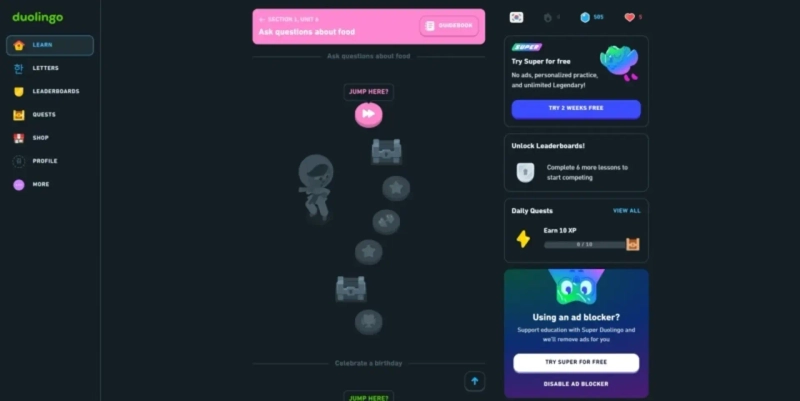
To bridge this gap, effective education and guidelines for Web3 projects are needed. The key is not simple documentation or lecture formats, but pulling users in through hands-on practice. Just as Duolingo turned the grand goal of “mastering a foreign language” into light, repetitive, five-minute game-like activities, Web3 education should break down difficult, abstract technologies into small, actionable units.
For example, the goal of “providing liquidity” can be decomposed into quest stages such as 1) swapping specific tokens, 2) depositing into a liquidity pool, and 3) staking LP tokens. Users experience real transactions by completing sequential missions, and they learn naturally through gamified rewards such as XP or badges.
This Learn-by-Doing approach is not about injecting information; it helps users learn on their own in a real-world environment. By executing transactions in a safe environment, earning rewards, and feeling their skills improve, users build confidence in Web3. Ultimately, this kind of approach becomes the starting point for engagement that delivers real value to both users and projects.
2.3 Combining the Two Keys
Ultimately, achieving Web3 mass adoption requires the two keys—“trustworthy discovery” and “hands-on, experience-based education”—to operate together. When experiential education supports users so that they can understand and use a promising project immediately after discovering it, discovery and participation can connect into one continuous flow. Discovering a good project is meaningless if users cannot try it; and even the best educational content is less effective if there is no project to apply it to.
There is a platform that targets precisely this point. Layer3 integrates the two keys of discovery and education into a single user experience. Through Layer3, users can explore reliably curated projects, and then complete quest-based missions to experience and learn those projects in practice—like Google with Duolingo built in.
This design goes beyond mere fun or reward mechanisms and focuses on creating sustainable engagement. Participation rooted in real technical experience and understanding—not one-off incentives—delivers better users to projects and deeper experiences to users. This is the most central point that differentiates Layer3 from existing platforms.
3. Layer3: Infrastructure for Attention and Identity
Layer3, one of the largest Web3 user onboarding and engagement platforms, integrates the two keys of discovery and education into a single user experience. Through this, it proposes a new direction: converting users’ temporary attention into verifiable, persistent on-chain identity. The platform organically combines three core components—Quests, on-chain credential cubes (CUBE), and omnichain infrastructure—building both an immersive user experience and a powerful identity system.
3.1 Quests: From Simple Clicks to Narrative Experiences
At the center of Layer3 are “Quests.” Early on, it offered one-off tasks called “Bounties,” but these only encouraged fragmented participation and did not lead to deep learning or durable relationship-building. To overcome these drawbacks, Quests were introduced to weave multiple individual tasks into a single narrative, designed to immerse users in the storyline of a specific ecosystem.
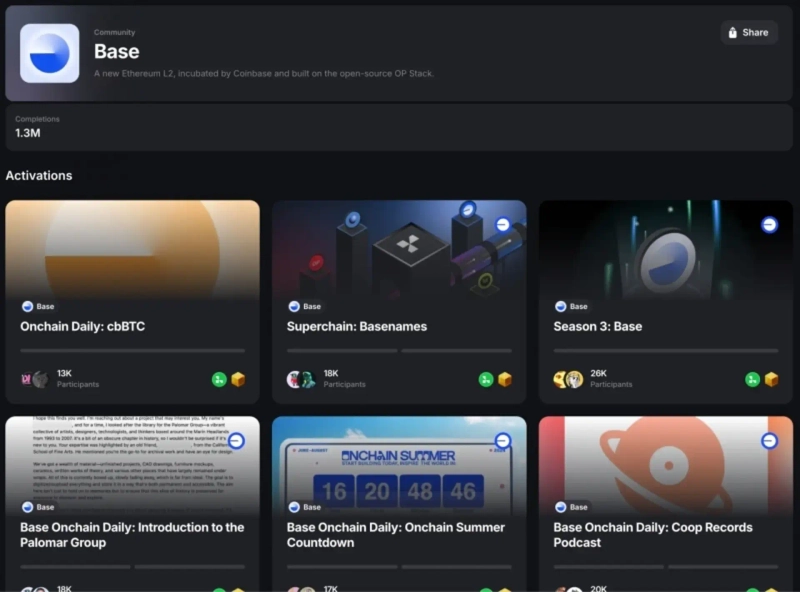
For example, a quest like “Getting Started with the Base Ecosystem” does not simply instruct users to use a particular dApp. Instead, it guides them through a complete sequence—bridging assets to the Base chain, swapping on major DEXs, and minting NFTs on a leading NFT marketplace—like a self-contained story. This gamified structure creates anticipation—“What will happen next?”—dramatically increasing revisit rates and user immersion. Users are not acting merely to claim rewards; they become the protagonist inside a story while experiencing the project.
This approach addresses what is known as the “cold start problem” for new users in the complex, fragmented Web3 environment—when they don’t even know where to begin. Quests turn learning and exploration into a game-like, rewarding experience, and encourage “learning through action” rather than listing information, helping users explore Web3 with confidence. It is one of the most effective mechanisms in Web3 onboarding.
Highly immersive experiences deliver strong benefits not only to users but also to projects. Through quests, projects can convey their vision and philosophy intuitively, making it an effective way to imprint the brand beyond a simple guide. Users learn not only functions but also the project’s raison d’être and direction.
In the end, this process forms the foundation for building an authentic community—users who empathize with a project’s journey and are ready to stay long-term—rather than those chasing short-term rewards. For projects confident in their product, Layer3’s quests can be not just a marketing tool but the most effective way to secure loyal fans and future power users.
3.2 CUBE: An On-Chain Trophy Case
The most core component of Layer3’s infrastructure is “CUBE (Credentials to Unify Blockchain Event),” which converts a user’s activity from a one-off event into a persistent, composable on-chain data asset.
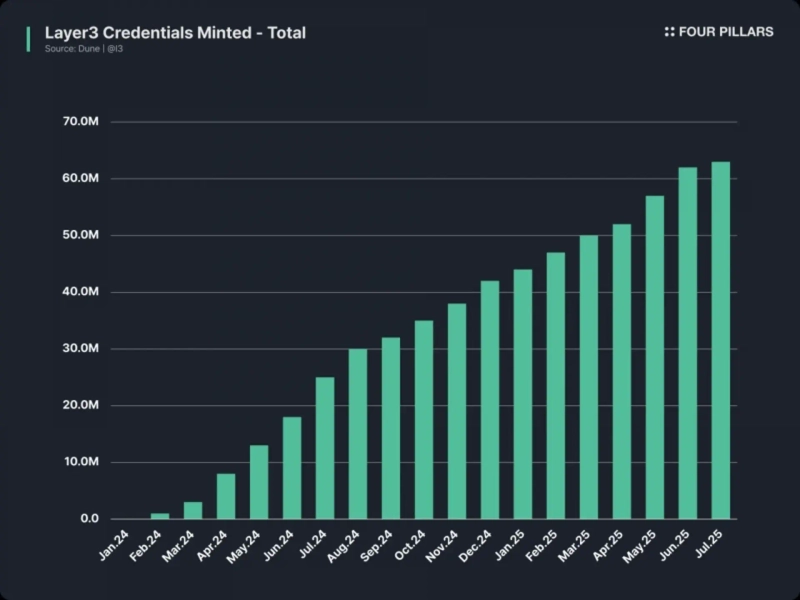
Technically, CUBEs are non-fungible tokens (NFTs) issued upon quest completion under the ERC-721 standard. Initially deployed on the Base network, they are now supported across multiple Ethereum Virtual Machine (EVM)-compatible chains such as Polygon and Arbitrum. Each CUBE includes rich, specific metadata—wallet address, chain used, applications used, quest completion time—and this data is securely recorded on IPFS (InterPlanetary File System), a decentralized storage protocol. Within just four months of launch, more than 10 million CUBEs had been issued, and as of July 2025 cumulative issuance surpassed 60 million, forming one of the largest on-chain datasets in Web3.
These CUBEs function as a user’s “on-chain trophy case,” forming the foundation of an “omnichain identity” that consolidates activity records scattered across multiple chains. In other words, a user’s reputation is no longer confined to a specific platform, but becomes a personal activity history that can be recognized across blockchains. By collecting CUBEs, users can receive benefits within the platform such as XP boosts, fee discounts, and opportunities to participate in higher-level quests.
The system’s true potential comes from CUBE’s permissionless and queryable nature. This means any protocol can leverage CUBE data to verify a user’s activity history without a direct partnership with Layer3. For example, a DeFi protocol could offer more favorable loan rates to users holding many CUBEs proving activity across multiple decentralized exchanges, or a game could design incentives by airdropping special items to users holding high-level CUBEs from other P2E games.
As external use grows, the value of holding a rich CUBE history rises for users. That, in turn, creates a powerful network-effect flywheel that draws users into Layer3 to mint more CUBEs. Layer3 is building a reputation and identity primitive for the omnichain era, beyond a single application.
In this way, while CUBEs are an honorable on-chain trophy for users, they also create new opportunities for projects. Projects can use accumulated CUBE data like an on-chain Customer Relationship Management (CRM) system. For instance, by designing tailored campaigns targeting only “users holding five or more DeFi-related CUBEs,” they can filter out automated bots and irrelevant users in advance. This becomes a high-efficiency marketing tool that reaches the best-fit potential customers directly.
In particular, CUBE’s permissionless nature strengthens Layer3’s network effects. Once a CUBE issued by one project begins to be used by other projects as a campaign participation condition, its utility and symbolism rise across the ecosystem. This both naturally spreads brand awareness for the original issuer and induces a virtuous cycle in which users return to that project to obtain the CUBE.
3.3 Omnichain Infrastructure: Connecting a Fragmented World
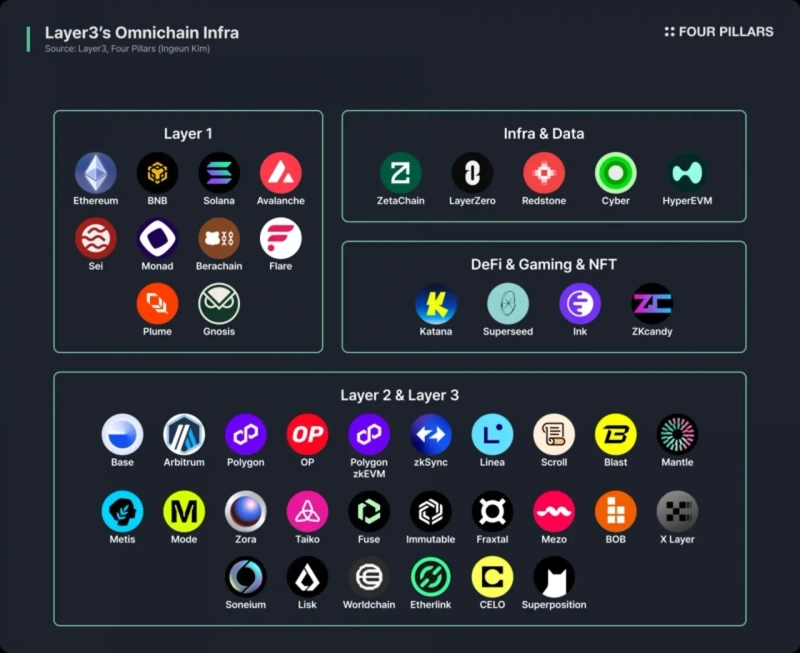
Another feature of Layer3 is its ecosystem-agnostic “omnichain” approach. The platform supports not only major Layer 1 chains such as Ethereum and Solana, but also more than 45 blockchains including Base, Arbitrum, and Polygon. This gives Layer3 the foundation to function as a true aggregator in the fragmented Web3 environment.
Users can explore Web3 broadly through a single unified interface—Layer3—without having to hop across multiple platforms to traverse different chains. This not only simplifies the user experience but also positions Layer3 as a powerful sponge that absorbs attention and users across the broader market. For projects as well, it effectively provides an efficient user acquisition channel to access an ambitious user base across Web3 without being limited to a specific chain.
This omnichain structure is a strategic weapon that removes growth boundaries for projects. Even projects rooted in a specific blockchain no longer need to confine marketing to that ecosystem. Through Layer3, they can easily reach users already familiar with on-chain activity across Ethereum, Solana, Base, and more.
This becomes a highly efficient growth strategy for new projects seeking early liquidity and community, or for existing projects expanding to new blockchains. With a single quest, they can run multi-chain campaigns simultaneously, analyze chain-by-chain user response with real-time data, and execute optimized user acquisition strategies. With these characteristics, Layer3 is positioning itself as one of the most agile and practical partners for ecosystem expansion.
4. Layer3’s Tokenomics and Market Validation
Beyond philosophical vision and technical design, Layer3 is proving its value through tangible market performance. Strong fundraising and a sustainable business model show that Layer3 is a core player in the Web3 user acquisition market.
In June 2024, Layer3 raised a $15 million Series A co-led by ParaFi and Greenfield Capital.
“We believe the network effects currently at work are similar to Amazon and Shopify. As more sellers join, more buyers come in, which in turn attracts more sellers—and activity and value grow exponentially.” — Greenfield Capital
A partner at Greenfield Capital said the investment was based on the view that “Layer3 has demonstrated the potential to become a top aggregator in Web3—like an Amazon of Web3—by bringing millions of users on-chain.” Including this round with participation from major investors such as Electric Capital, Immutable, and Amber, Layer3’s total cumulative funding stands at $21.2 million. This is a strong signal that the market highly values Layer3’s vision and execution.
4.1 $L3 Tokenomics and a Sustainable Business Model
At the center of the Layer3 ecosystem is its native token, $L3. With a total issuance of 3.33 billion, $L3 is designed to be more than a reward instrument; it functions as an economic engine to accelerate platform growth and align incentives among all participants.
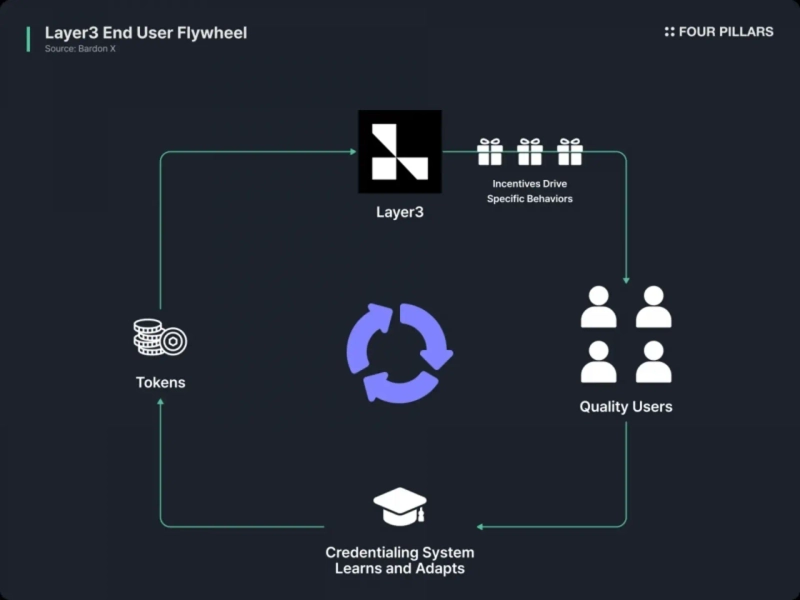
The core of this tokenomics is a “value-capture flywheel” structure. Projects seeking to acquire new users must buy and burn L3 tokens to post quests on Layer3 and access the CUBE credential network. This utility-linked buy-and-burn model directly ties user acquisition—the platform’s main objective—to the token’s value. As project demand increases, sustained buy pressure and a deflationary effect lift the token’s long-term value.
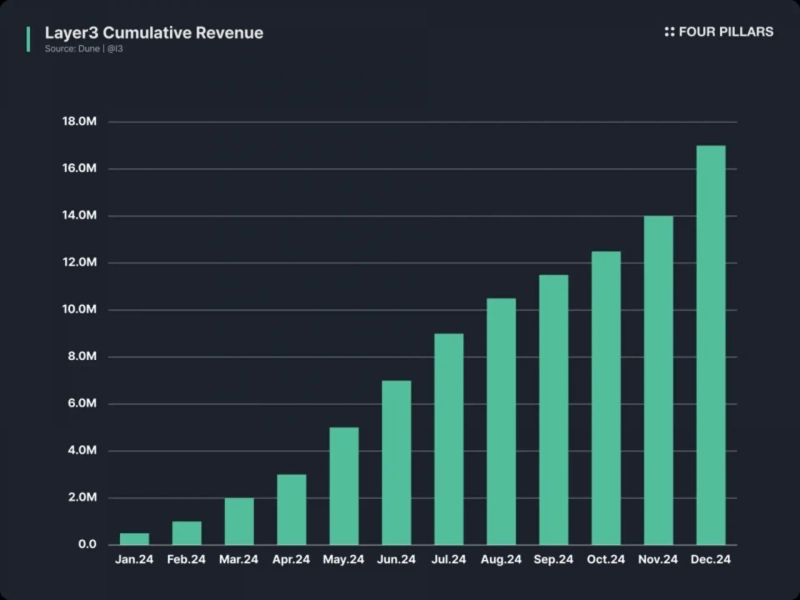
In fact, since its founding Layer3 has recorded more than $16.5 million in cumulative revenue, and grew revenue 10x in 2024 alone. Notably, about 40% of this revenue came from partner projects and 60% came from CUBEs issued by users to raise their reputation score. This indicates that Layer3 has built robust revenue models on both the B2B (projects) and B2C (users) sides. In particular, user-derived revenue—such as CUBE issuance fees and swap/bridge fees—is used to buy $L3 in the market, strongly supporting token value.
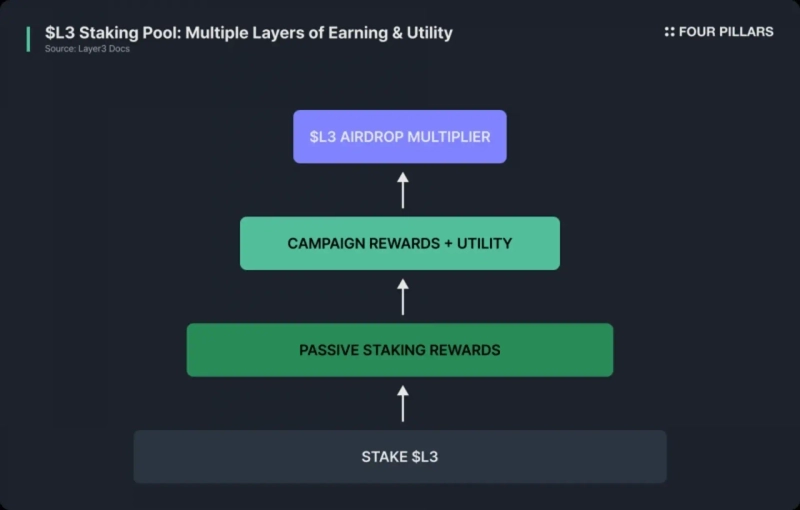
Further strengthening this flywheel is the “Layered Staking” model—effectively a “Proof-of-Engagement” system—that goes beyond passive staking where users simply deposit tokens and earn interest. Instead, it differentiates rewards based on users’ active contribution.
- Tier 1 (Start of participation): Stake L3 tokens to passively earn $L3 interest or gain the right to participate in governance.
- Tier 2 (Exclusive opportunities): Users who stake at least a certain amount of $L3 can participate in exclusive quests from partner projects to earn not only $L3 but also partner tokens such as $OP and $ARB. Higher-tier reward opportunities also open up, such as launchpad access that lets users acquire new project tokens early.
- Tier 3 (Contribution-based rewards): The core of the model. A multiplier is applied to $L3 rewards based on the user’s level of activity on the platform. This means rewards are determined by contribution, not merely capital size. For example, a user who completes 10 quests might receive 1.5x rewards, and completing 20 quests yields 2x rewards. This structure prevents a small number of whales holding large amounts of L3 from monopolizing rewards, encourages sustained activity, and serves as a strong economic deterrent against Sybil attacks.
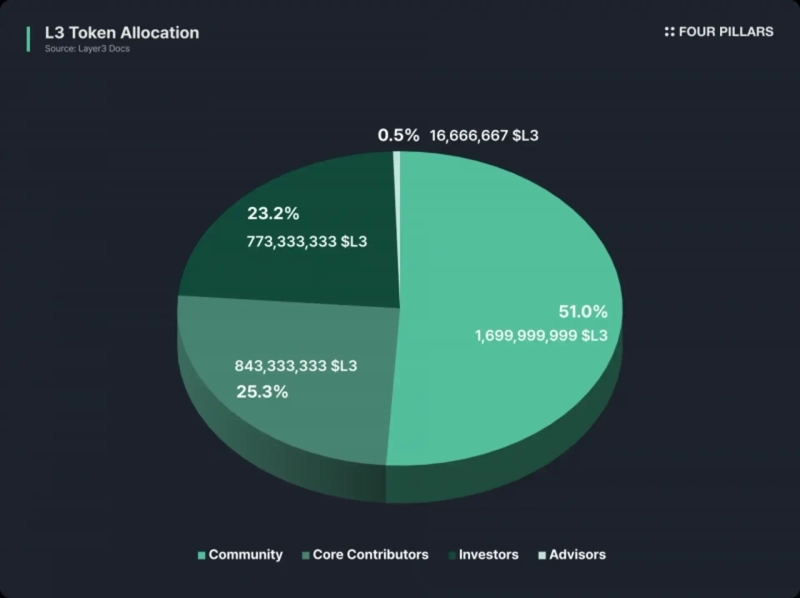
The token distribution structure also focuses on long-term ecosystem growth. 51% of total supply is allocated to the community, forming the basis for future airdrops and ongoing incentive programs. Meanwhile, allocations for core contributors and investors are subject to a one-year cliff lockup and linear vesting over the following three years, designed to prevent abrupt early sell pressure and incentivize long-term contribution to project success.
4.2 Partnership Case Studies: Value Proven in Numbers
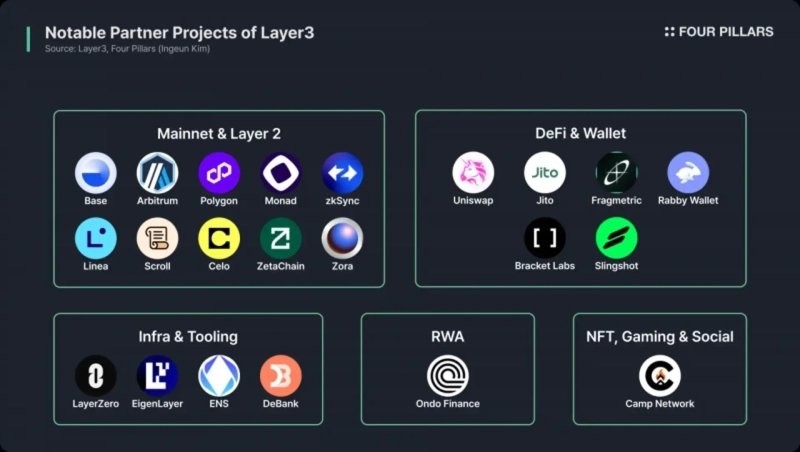
Layer3’s value becomes clear through concrete partnership outcomes, showing it is not just a traffic channel but capable of creating real value and converting users into long-term participants.
- Ondo Finance: Through a campaign to promote adoption of USDY, an RWA-backed stablecoin, it attracted $1.04 million in new TVL and acquired 14,769 users in just 30 days. More importantly, after the campaign ended, $960,000 in TVL—92%—was retained, and user retention reached 33.4%. This is strong evidence that users driven by Layer3 were not merely chasing short-term rewards, but understood the product’s value and chose long-term holding—i.e., “high-quality users.”
- Jito: Jito, a core liquidity staking protocol on Solana, ran three quests via Layer3. About 9,400 users participated, of whom 5,400 were new to Jito. Remarkably, more than 70% of staked assets were retained even one month after the campaign ended.
- EigenLayer: EigenLayer, which is leading the major crypto narrative of “Liquid Restaking,” ran a large-scale educational campaign, “EigenLayer Unlocked,” with Layer3. The campaign was designed for users to learn complex restaking concepts through direct experience. Via quests, users interacted with various Liquid Restaking Token (LRT) protocols in the EigenLayer ecosystem, generating hundreds of thousands of on-chain transactions. This demonstrates Layer3’s ability to effectively educate and disseminate some of the most complex and important technical narratives in Web3.
- Monad: Monad, a Layer 1 blockchain with a Parallel EVM architecture, used Layer3 as a core onboarding partner from the testnet stage. Through the “Monad Explorer” campaign, it encouraged many developers and early users to preview dApps in the Monad ecosystem.
In addition, more than 50 major projects across Web3 ecosystems—including Uniswap, Base, Arbitrum, and Optimism—are acquiring users through Layer3. The fact that Layer3 users received 20.4% of the entire Arbitrum airdrop and 29.7% of the zkSync airdrop clearly shows that the Layer3 community is among the most active and influential user cohorts in Web3.
4.3 Metrics That Keep Growing
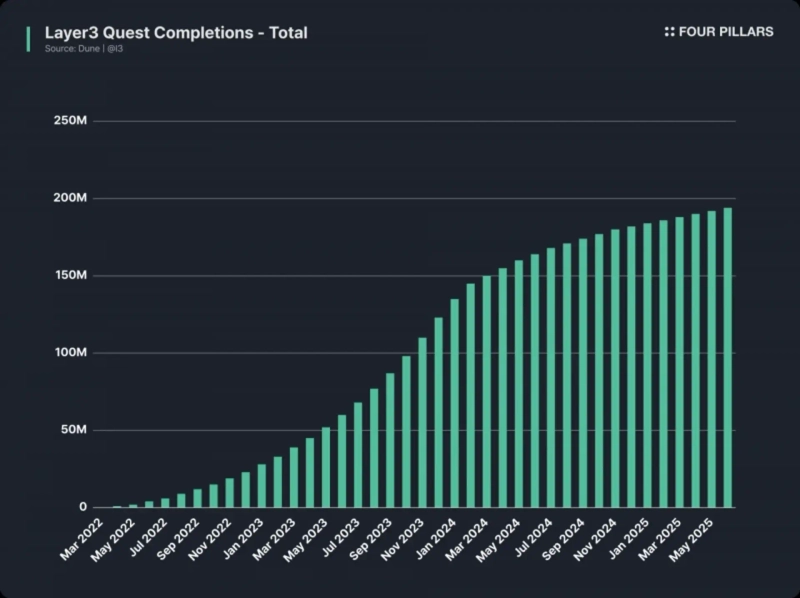
Layer3’s growth is visible in hard metrics. As of July 2025, cumulative users surpassed 3.2 million (about 8.2 million unique wallets), and the number of quests completed and transactions on the platform exceeded 167 million. Monthly website visitors reach 1.9 million, and average session time exceeds 15 minutes, indicating strong user engagement.
Beyond quantitative expansion, Layer3’s qualitative growth is even more notable. For example, on the Base chain, the 30-day retention rate for users who used Layer3 at least once was 6.1x higher than that of all other Base users, and the 120-day retention rate was 11.3x higher. This suggests Layer3 excels at driving sustained on-chain activity rather than one-off participation. Such high user quality and engagement have also made Layer3 a highly capital-efficient company, achieving industry-leading revenue per employee with a team of just 16.
This growth is driven by a classic two-sided marketplace flywheel similar to Amazon and Shopify: more users attract more projects, and more projects provide more quests and rewards, pulling in even more users. Layer3 combines this with a buy-and-burn mechanism for the L3 token, ensuring platform growth translates directly into token value appreciation, adding momentum to the flywheel.
4.4 Market Validation—and the Next Step
In this way, Layer3 has turned the narrative of “discovery” and “learning” into a real business through solid fundraising, value-capture tokenomics, and overwhelming market performance. Its L3-centered economic model has built a powerful flywheel that links platform performance to benefits for all participants, and partnerships with major protocols have demonstrated that Layer3 is one of the most efficient and trusted user acquisition channels in Web3.

This market leadership is underscored by U.S. retail investing platform Robinhood’s move into the RWA market as a next-generation core business. Robinhood began by tokenizing U.S. stocks and ETFs for the European market, selecting Arbitrum as its initial technical partner. The strategy offers users a new financial experience—24/7 trading and on-chain custody and utilization of assets—and aims longer term to tokenize shares of private companies such as OpenAI and ultimately build its own RWA blockchain, the “Robinhood Chain.”
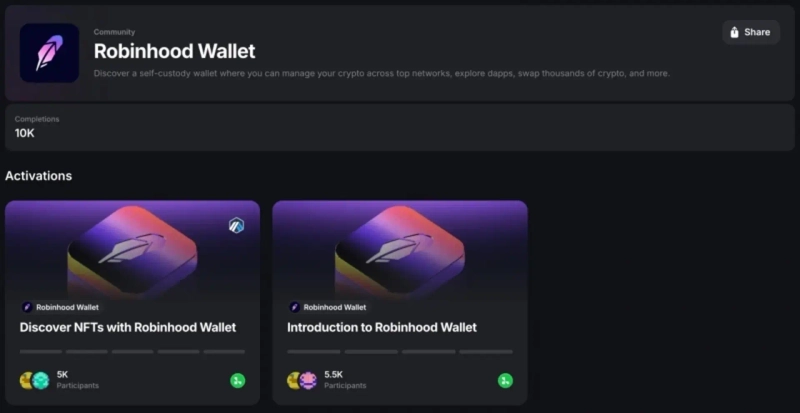
In this process, Robinhood selected Layer3 exclusively as its user education and onboarding partner. Millions of users are designed to learn the new concept of RWA through Layer3’s quest system and directly experience an Arbitrum-based real-world asset investing journey via the Robinhood Wallet. This case shows that Layer3 has positioned itself not just as a dApp marketing tool, but as a strategic partner that global financial companies choose first when launching new businesses.
Layer3 is not resting on its success; it continues technical advancement to further accelerate growth. The concrete execution plan is Layer3 v3, unveiled in April 2025. v3 is a pivotal update that elevates Layer3 from a simple quest platform to an “Onchain Operating System.”
- Seamless user experience: Through the Layer3 Wallet, it removes concerns about chains and gas fees, introducing one-click transactions and an instant rewards system. This is essential for onboarding the next millions of users who are not familiar with Web3, such as Robinhood users.
- Intelligent campaign automation: An AI-based Intel system automates how partners deploy and optimize campaigns to maximize return on investment (ROI). At the same time, it recommends the most relevant personalized quests to users to raise participation.
- Strong community building: The layered staking model differentiates rewards based on actual contribution rather than simple capital size, fostering a power-user community that contributes most to platform growth and tightly aligning long-term incentives with them.
In conclusion, Layer3 already has a market-proven economic model, clear expansion potential into the mainstream, and the technical infrastructure delivered through v3. All of these elements interlock toward a single vision: becoming Web3’s gateway—“discover like Google and learn like Duolingo.”
5. Layer3: The Layer of Discovery and Learning for Mass Adoption
Layer3 is becoming a successful example of directly tackling two long-standing problems in the Web3 ecosystem: the “chaos of discovery” and the “barrier to learning.” Rather than merely listing projects, it provides an integrated experience in which users discover and learn for themselves, creating a new way to convert temporary attention into persistent on-chain identity.
Layer3’s direction has been realized on technical foundations such as narrative-driven quests, on-chain credential CUBEs, and omnichain infrastructure. In addition, a sophisticated tokenomics model built around the L3 token and partnerships with mainstream companies like Robinhood have helped Layer3 move beyond an experiment and establish market viability and sustainability. Together, these elements have played a decisive role in positioning Layer3 as a distinctive leader in the Web3 user onboarding and engagement market.
However, Layer3’s path ahead will not always be smooth. The biggest challenge is continually proving the “authenticity of participation.” Layer3’s structure effectively filters out airdrop hunters who chase only short-term rewards, but as long as rewards exist, skilled mining-like behavior that masquerades as learning will inevitably become more sophisticated. Ultimately, the platform must solve the problem of distinguishing whether on-chain reputation via CUBEs reflects users’ real understanding and loyalty, or merely optimized behavior to maximize rewards. If that trust wavers, the value of the ecosystem built on it may also be shaken.
Even so, Layer3’s positive impact on Web3 as a whole is clear. Where the prevailing approach used to be to attract broad, indiscriminate attention through large token rewards, Layer3 has shifted this to education-based onboarding. Bringing in users who have experienced and understood a project’s value can steer the broader ecosystem toward a healthier, more sustainable direction—projects gain more authentic users, and users receive more meaningful experiences.
Looking ahead, Layer3 is signaling an expansion beyond an onboarding platform into an “on-chain super app.” Users’ quest histories and CUBEs could function not only as proof of activity but also as an “on-chain credit score.” With this, Layer3 could recommend tailored DeFi products to verified users, or build new SocialFi or InfoFi ecosystems that connect users with similar interests. In other words, beyond discovering and learning, the experiences of investing and connecting could take place within a single Layer3 platform.
In particular, connectivity to stablecoins—drawing global attention—could become a key driver of Layer3’s growth. As major fintech companies such as PayPal and Stripe adopt stablecoins and new forms of stablecoins emerge, the market for “user education and early adoption” is expanding rapidly. Layer3 is well positioned to capture this market. New stablecoin projects can explain their mechanisms and acquire early users through Layer3, and if stablecoins such as $USDC are integrated as rewards and payment rails, platform usage becomes more convenient, potentially lowering the final barrier to Web3 mass adoption.
Ultimately, Layer3’s greatest potential lies in becoming a decisive bridge between Web3 and the mainstream. As shown in multiple cases including Robinhood, Layer3’s ability to abstract complex Web3 structures into user-friendly experiences is difficult to replace with any other protocol at this stage. As many Web2 companies enter the blockchain market, it appears clear that Layer3 will be one of the first onboarding and education infrastructure partners they seek. Accordingly, Layer3’s success is not just the achievement of one platform, but an important barometer for whether Web3 as a whole can expand into the mainstream.
Four Pillars is a global blockchain specialist research firm. Experts with years of hands-on experience have come together to provide research services to global clients. Since its establishment in 2023, it has conducted a wide range of research with more than 100 protocols and companies across areas such as stablecoins, decentralized finance, infrastructure, and tokenomics, aiming to reduce information asymmetry across the industry and support the practical adoption and growth of blockchain.
Disclaimer
This article was written based on the author’s independent research sponsored by Stable. It is intended for general informational purposes only and does not provide legal, business, investment, or tax advice. You should not make investment decisions based on this article, nor use it as accounting, legal, or tax guidance. Any reference to a specific asset or security is for informational purposes only and is not an investment recommendation. The views expressed in this article are the author’s personal opinions and may not reflect the views of any related institution, organization, or individual. The opinions reflected herein are subject to change without prior notice.
This report is independent of the publication’s editorial direction, and all responsibility lies with the information provider.

영문프로필_tek기자
tek_win_chrome@bloomingbit.ioENG_hi! YS