"Crude supply chokepoint blocked"…China watches oil prices closely as Hormuz blockade looms
Summary
- With Iran’s blockade of the Strait of Hormuz and attacks on vessels, the cost of shipping Middle Eastern crude reportedly jumped to a record high.
- Experts said that absent an actual supply disruption, international oil prices could trade in the $80–$100 per barrel range, with 5–10% daily volatility.
- They added that if the Hormuz blockade persists or worsens, international oil prices could rise to $120–$150 per barrel, and in extreme cases up to $200.
Forecast Trend Report by Period


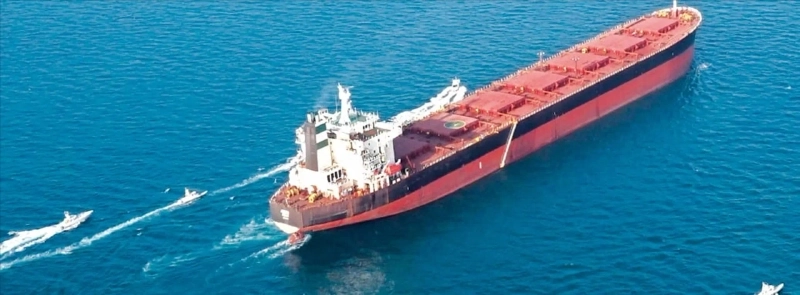
As Iran has pulled out the option of blocking the Strait of Hormuz, a key crude oil shipping lane, in retaliation for a U.S. attack, China—highly dependent on Middle Eastern crude— is also closely monitoring the fallout.
On the 2nd (local time), Bloomberg and other foreign media reported that the war’s repercussions pushed the cost of transporting crude from the Middle East to China to a record high. According to the Baltic Exchange in London, the media said, daily freight costs for a 2 million-barrel tanker on an industry benchmark route rose to $424,000 (about 620 million won).
With Iran stating its intention to close the Strait of Hormuz, at least three vessels were reported to have been attacked off the Persian Gulf coast as of Friday morning, leaving one person dead. Iran’s semi-official Fars News Agency said there were no tankers currently transiting the strait, but 26 ships were loitering around it and 27 had halted operations.
The Strait of Hormuz is the export route for Middle Eastern oil producers such as Saudi Arabia, Kuwait, Iraq, Iran, and the United Arab Emirates (UAE). Roughly 20% of global oil consumption—about 20 million barrels per day—passes through the strait.
Moreover, the Middle East accounts for one-third of global crude production, and Iran is the third-largest crude producer in the Organization of the Petroleum Exporting Countries (OPEC). Depending on how the conflict unfolds, international oil prices could swing sharply.
Liu Tao, a senior researcher at Guangcai Chief Researcher, said in an interview with Economic Observer that OPEC+ supply increases and releases from strategic reserves by the U.S. and others are unlikely to provide immediate relief, adding that in the short term international oil prices are expected to remain firm.
He forecast that if the attacks are limited to military targets and do not lead to an actual disruption in crude supply, prices would trade in the $80–$100 per barrel range with daily swings of 5–10%. He also mentioned the possibility of prices reaching $120–$150, and in an extreme scenario, $200.
China News Service reported that if the Strait of Hormuz blockade persists, oil could reach $120–$130 per barrel, and in a severe case may exceed $150.
Zou Zhichang, a researcher at Fudan University’s Center for Middle East Studies, also warned that if passage through the strait continues to be impeded, oil could rise above $90 per barrel, amplifying uncertainty.
Market intelligence firm ICIS likewise projected that if the blockade continues, international oil prices could top $100 per barrel. On the ICE Futures Europe exchange, Brent crude futures for May delivery at one point surged 13% intraday to $82.37 a barrel, and settled at $77.74, up 6.7% from the previous session.
Park Su-rim, Hankyung.com reporter paksr365@hankyung.com

Bloomingbit Newsroom
news@bloomingbit.ioFor news reports, news@bloomingbit.io